Search this website
Email Jan Susina
This form does not yet contain any fields.
    login

    Entries in Disney (5)

    Saturday
    Jul072012

    A psychedelic Alice opens in Disneyland

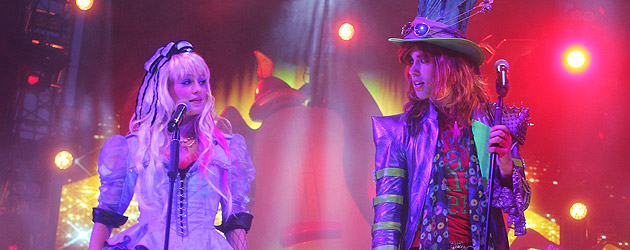
    Looks like we'll have to go back to Disneyland to see the new Alice section in the revamped Disney California Adventure.  This Alice is inspired by the weird, colorful word of Tim Burton's film that's re-imagined through the theme park lens.  It's a House of Cards nightclub that opens in the evening with arcade and a rock band headed up by a Mad Hatter channeling Mick Jagger and a White Rabbit dj channeling deadmau5. The caterpillar dance in channeling Pilobus dancers.  Alice is channeling Ashley Tisdale from High School the Musical. Check out the video here.  Maybe just a little squeaky clean, or just squeaky teen Disney, but still seems fun.

    Alice in Disneyland

    Tuesday
    Mar272012

    Fairy tale films

    The films Mirror, Mirror and Snow White and the Huntsman are part of a trend of re-interpreting traditional fairy tales with contemporary twists that move beyond the bouyant Disney versions. Mirror, Mirror, which opens Friday, stars Julia Roberts in a humorous retelling of Snow White.  In a significant contract, the  Huntsman version is much darker, more brooding and somewhat in the trend of Twilight and Hunger Games. Clearly, Red Riding Hood, directed by Catherine Hardwick who directed the first Twilight film, is part of this collection of films as well and Beastly with Vanessa Hudgens. Also released in March, direct to DVD, is Grimm's Snow White. When we saw Hunger Games over the weekend, we saw a previous for Snow White and the Huntsman, but not Mirror, Mirror, which opens sooner. 

    As I tell my classes, every generation re-interprets fairy tales.  The wide difference in these two Snow White films suggests the malleability of this classic story.  Disney's version is primarily from the young princess's perspective, but in the two upcoming films, the older Queen has a more prominent role.  I will be interested to see Julia Rogers as the Queen, as she seems to be relishing the role and having fun.  I am not sure how evil she is in her version.  But in the film to be released in June, the older Queen is clearly evil.  Then, too, look at the title of the second film, Snow White and the Huntsman -- the focus is on the relationship between Snow White (played by Kristen Stewart) and the handsome Huntsman out to kill her (Chris Hemsworth). Charlize Theron, who some might say has a history of looking more stunning than Kristen Stewart, plays the Queen.  Theron also has played some roles of gutsy, powerful roles while Stewart seems to be majoring in mumbling, slightly awkward young women.  Hmm, the conflicts arise.


    Thursday
    Feb172011

    How beastly! Two films re-imagine fairy tales for teens

    Wolves! Ugly beasts! Beautiful girls in hoods! Dark woods! Magic! 
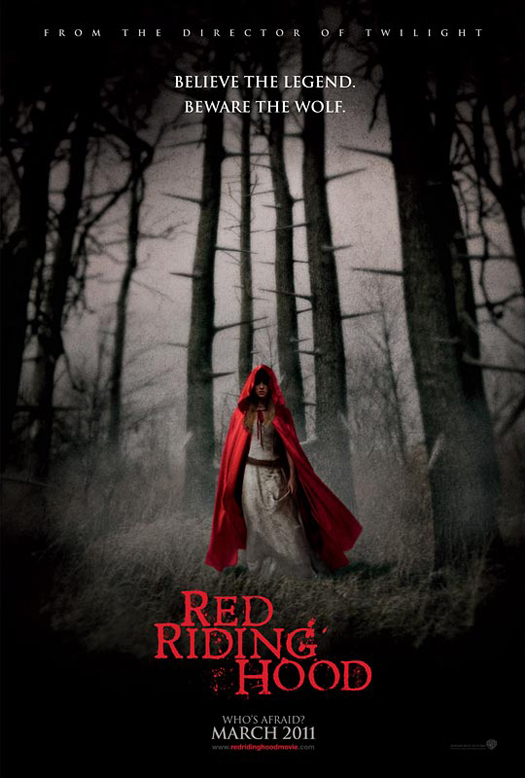
    Two films being released in March -- Beastly and Red Riding Hood -- are re-imagining  traditional fairy tales for modern teen audiences. Historically, fairy tales have been revised to suit the sensibility of that era's  audiences.  Some critics chafe at Walt Disney and his studio's interpretations because the animated versions do not keep to the 'traditional' script. But Disney knew, as fairy tale scholars know, that fairy tales are appealing, in part, because at their core they weave interesting stories with issues that the audience wants to work out and contemplate.  The re-interpretations enable each generation to embrace and analyze the core stories and related issues through their own lens.

    Fairy tales started as oral tales, and as we all know, when you tell stories aloud you change them to adapt to the audience.  These new films are doing the same thing -- seeing if they can mine the contemporary adolescent interest in the gothic,  darkness, issues of beauty, while trying to understand and unravel universal problems.

    The creators of the new films, or at least the trailers, seem to have a bead on contemporary teen and young adult audiences.  For Red Riding Hood, the director is Catherine Hardwicke, who directed the enormously successful first Twilight film and the troubling Thirteen (2003).  Red Riding Hood is played by Amanda Seyfried who is the cute, slightly over dramatic girl in Mamma Mia! (2008), Dear John (2010), and Letters to Juliet (2010). She brings to the role experience in the TV series Big Love (2006-11) and Atom Egoyan's Chloe (2009). Also starring are Lukas Haas (great as a child in Witness (1985) and recently in Inception) and Gary Oldman (who I just talked about while teaching films based on Dracula since he starred in Coppola's vision). The trailer makes the film look like a Twilight fairy tale -- probably a clever calculation that will make the film have good box office.  Here's the link to the trailer of Red Riding Hood.

    Beastly is set in contemporary times and is based on "Beauty and the Beast." The trailer shows the lead, played by Alex Pettyfer, as a pretty boy Beastlywho is good looking, probably a rich football player, and popular.  (Pettyfer was interesting in Alex Rider (2006). Through a magic curse, he becomes disfigured, in an interesting way.  It takes the love of a girl, played by High School Musical's Vanessa Hudgens, to see beneath the surface of his unusual appearance.
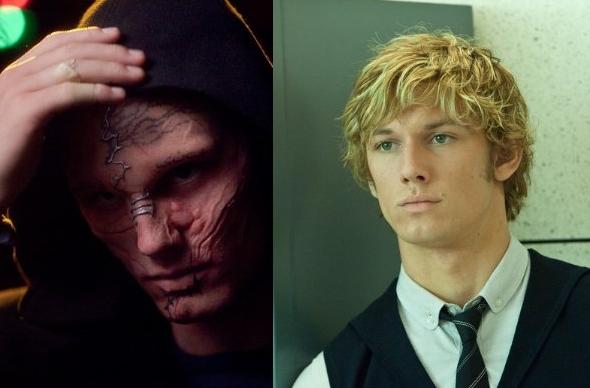
    "Beautiful people get it better" is the opening line of Beastly's trailer. The line is curious here because the beautiful person is a boy, not a girl.  For years, feminists have criticized beautiful images of girls, so it's interesting just in the twist of that role being played by a boy. Will feminists consider the problems of handsome boys and men as well?

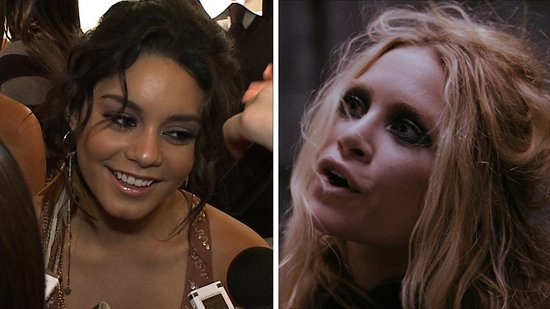
    Clearly inspired by the success of the Twilight series and probably by Harry Potter and Disney, the previews show films with the moody gothic sensibility so popular with teens as they retell familiar stories in either a contemporary setting Vanessa Hudgens and Mary Kate Olsen star in Beastly(Beastly) or a dark forboding, northwoods type setting (Red Riding Hood).  I assume that the tremendous success of Tim Burton's dark Alice in Wonderland film is bouying the studio's hopes.  There are similar merchandising efforts, though not as overwhelming as for Burton's Alice. Also just reading a review in the Miami Herald for I Am Number Four, which also stars Pettyfer and is similarly aimed at the YA audience, has a similar story arc to Twilight.  Hollywood loves to get on the bandwagon.
    By the way, I've also been told by our local tween that beastly means great, cool, fantastic.

    Saturday
    Mar062010

    Much Ado About Alice: Thoughts on the new Wonderland

    Unless you’ve been living in a rabbit hole, you’re probably aware that Tim Burton’s Alice in Wonderland promotion poster for Tim Burton's Alice in Wonderlandopened up this weekend.  Its first day ticket sales were more successful than Avatar’s first day. But just because a lot of people go to see a film, doesn’t necessarily mean it’s a great film.

    There is an inverse relationship between Tim Burton’s Alice in Wonderland and Lewis Carroll’s Alice’s Adventures in Wonderland: the more you like the Alice books, the more you are probably going to dislike Burton’s film.  Obviously, I like the Alice books.  That’s not to say films are always inferior to the books on which they’re based.  For example, Victor Fleming’s Wizard of Oz film is more effective than L. Frank Baum’s Wonderful Wizard of Oz original novel.

    This is not a film version of the Alice books.  Instead, key characters from the Alice books appear in the film.  It’s a bit like Gavin Miller’s Dreamchild in that an older Alice revists Wonderland.  In Dreamchild, it’s an 80-year-old Alice reflecting on the books and her friendship with Lewis Carroll.  In the new film, Alice is a fetching, independent 19-year-old contemplating a marriage proposal to a wimpy, titled young man.   Unlike Dreamchild, Lewis Carroll is absent in this film and even his usual stand-ins, the Dodo and the White Knight, don’t appear.

    I think the film is misnamed and should be called Return to Wonderland.  Burton’s Wonderland relates to Carroll’s Alice books in the same way that Walter Murch’s Return to Oz relates to Baum’s Oz series.

    What is surprising about this film is how much references previous films.  It is a very much a pastiche of similar films, mostly fantasy films.  Tim Burton clearly references his previous films, including Nightmare Before Christmas, Edward Scissorhands, Sweeney Todd, Corpse Bride, and Planet of the Apes. The screenwriter, Linda Woolverton has helped with Disney films such as The Lion King and Beauty and the Beast.  So, the film dips into Disney references including the opening taken directly from the Disney animated Peter Pan.  Johnny Depp’s Mad Hatter is a combination of Peter Pan, the Scarecrow from The Wizard of Oz combined with Jack Sparrow from the Pirates of the Caribbean series and the Joker from Christopher Nolan’s The Dark Night and perhaps Charlie Chaplin.

    There are plenty of references to The Wizard of Oz and the Broadway musical Wicked, The Golden Compass, and The Lion, The Witch, and the Wardrobe.  The last two films were inspired by the success of The Lord of the Rings, so that’s in here, too.  The relationship between the Red and White Queens is borrowed from Wicked.  Others have noted reference to The Princess Bride and Shrek.  The fighting Dormouse reminded me of The Tales of Despereaux.

    Woolverton seems to have acknowledged problems with the script.  In fact, a running theme throughout the film is whether this is the ‘right’ Alice.  The Wonderland characters frequently ask the White Rabbit if he has brought the wrong Alice back.  Is she an imitation Alice? Has she lost her Muchness? She’s not Alice, but Almost Alice. In short, Tim Burton has directed the wrong Alice.  I sort of think he knows this because the question of an authentic Alice is an essential aspect of the film.

    Alice is warned in this film not to divert herself from the path.  Alice replies, I don’t divert myself from the path, I make the path.  If you are going to re-write Alice in Wonderland, then you better be as good a writer as Lewis Carroll. 

    Burton’s film is not as bad as the dreadful The Cat in the Hat by Bo Welch, which featured Mike Meyers as the Cat.  But it is not as inventive as the interpretation of Maurice Sendak’s Where the Wild Things Are by Dave Eggers and Spike Jonez.

    Mia Wasikowska makes an arresting Alice.  But viewers haven’t seen so much skin in Alice since the 1976 X-rated, musical version of Alice in Wonderland.  Not only does Tim Burton feature a 20-year-old play Alice, she is constantly on the verge of having her clothes slip off.  Sometimes this film feels as if it’s a Maxim version of Alice in Wonderland.

    In the beginning of the film, Alice refuses to wear a corset or stocking, which shocks her proper Victorian mother.  Once the adventure begins, Alice is running around in flimsy petticoats in a land that’s actually Underland, not Wonderland.  Alice’s clothes never quite fit; they are either too tight, too loose, too short, or slipping off completely. This is less Queen Victoria’s Alice and more of a Victoria’s Secret Alice.

    Not only does Burton up the sexualization of Alice, but he increases the violence in Wonderland as well.  This film transforms a minor episode of Through the Looking-Glass involving the Jabberwocky into the climax of the film.  This has become a violent film, as so many children’s fantasy films are these days.  They all have to end with a big battle.  The original Alice books are much less violent.  When the Red Queen says “Off with her head,” the King quietly pardons them.  In this film, the King’s head is floating in the moat with the other heads that have been cut off by order of the Red Queen. This is mock execution the way children play.  It wasn’t intended to be staged execution viewed with violent lust by the Red Queen, as it is in this film.

    There are a several clever additions to the Alice film.  Much is done with the Hatter’s meditation on words beginning with the letter M.  But a couple of words not mentioned in the film are a fair description of it: messy, major mashup of previous children’s movies, and mayhem.  Tweedledum and Tweedledee characters are great.  The landscapes are highly imaginative.

    I felt the 3-D version seemed somewhat of a distraction to me and unnecessary.  Younger audience members seemed to like it.  Ironically, Carroll would have been fascinated with 3-D films. 

    While this is certainly not my favorite Alice film, it is an interesting variation on Carroll’s characters.  But as long as it directs some folks back to Lewis Carroll’s original Alice books, it’s fine with me.

    Monday
    Feb222010

    Carroll always on the cutting edge of technology

    While putting together my recent book, The Place of Lewis Carroll in Children's Literature, it became from Tim Burton's 2010 Alice in Wonderlandinteresting to note how Carroll was fascinated with new technologies as well as how often his works were adapted to new technologies as well.  So it's not surprising that Tim Burton's upcoming film, Alice in Wonderland, is also at the heart  of controversy with latest of film technology -- 3-D.  Alice's imaginative appeal often dovetails with new technology.

    Many Hollywood observers are wondering if 3D Alice will kick out 3D Avatar, the runaway 3D success? In addition, film distributors in the U.K., and now the U.S. are upset that Disney is planning to release the Alice DVD releatively quickly after the film release.  Disney is trying to figure out how to capitalize on the success of the film by shortening the theatrical release.  But owners of theaters want their projection window to be as big as it can be.  Again, it's the very current issue of watching films in theaters (expensive) or at home (not quite as expensive).  Lewis Carroll holding a camera lens. He was one of the earliest amateur photographers in England.

    Carroll, of course, was an amazing photographer at a time when photography was just beginning to become popular.  Carroll must have liked that it required lots of equipment, experimenting with chemicals and formulas, and the knowledge of know how to work it all together.  But he must have appreciated the theatricality of it as well -- look at how he staged many of the people in his photographs.  Staging photographs would have particularly helped the children focus but it also is a way to imitate theater, which he liked.  Photography was developed in 1839 and by the 1850s Carroll was an accomplished amateur photographer.  He is considered, with Julia Margaret Cameron, one of the best nineteeth-century photographers of children.

    When Carroll published the Alice books, he pushed the envelope for printing and publishing. He wanted a book that would fit the size of children's hands.  He was very specific on the size and color of the binding to appeal to children.  He wanted the words and text to work together because, as he wrote, "What is the use of a book without pictures?"  And in later editions, he asked for the book to have paper covers (a book jacket) and to advertise his other works.  He was one of three people who independently came up with the concept of a book jacket.White Rabbit in a video game from Tim Burton's new Alice in Wonderland

    Carroll often had characters in his books who were tinkers, people who experimented with different technologies to see what would happen.  Subsequently, tinkers have liked Carroll's books and re-imagined them in new media.  Alice has appeared in films since nearly the beginning, was early to be animated and has appeared in numerous video games and new media re-adaptions.  There's a whole chapter about these adapations in my book.  And Alice just keeps adapting.  Still, I think the original is the best.